



The short answer
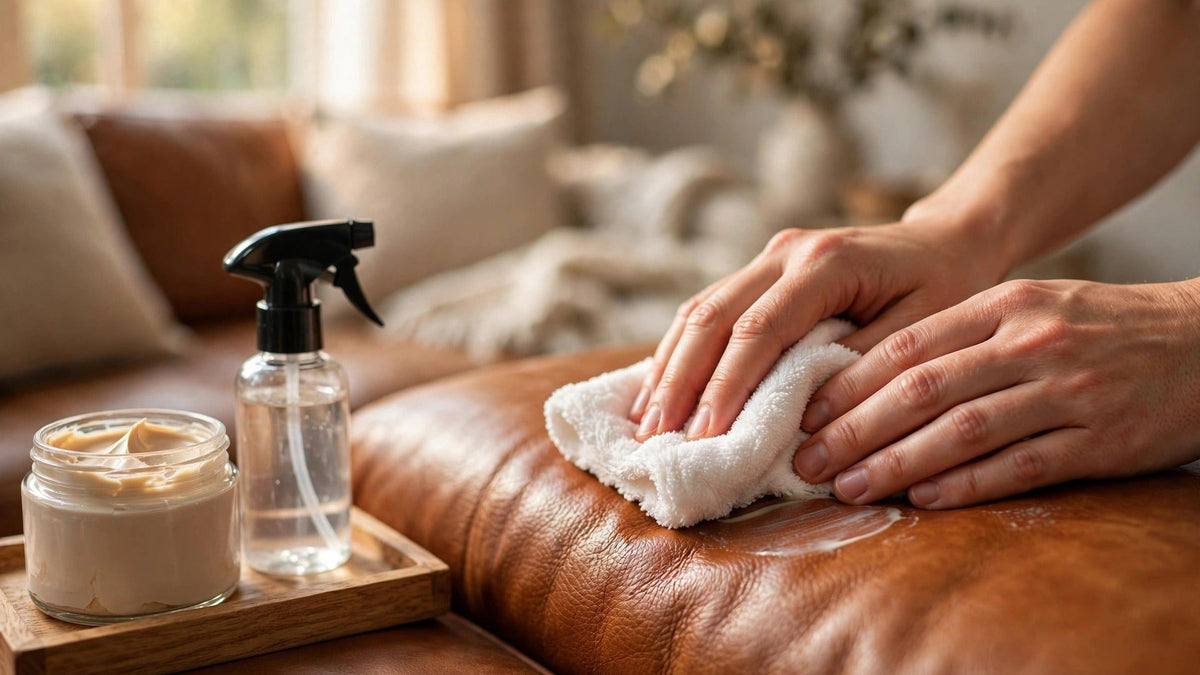
Keep quality leather furniture out of direct all-day sun, wipe spills immediately, and condition it once or twice a year — that's the whole routine. Good leather is lower-maintenance than fabric in daily life: it wipes clean, resists punctures, doesn't trap pet hair, and ages beautifully when it's fed once in a while. The better the leather, the less it asks of you.
What heat, humidity, and sun actually do to leather
Leather is a natural material, and it reacts to its environment. Here's the honest breakdown:
Heat. Indoor heat with air conditioning is a non-issue. Leather only suffers in sustained high heat — think a closed-up sunroom in August or a garage without climate control. In a normal air-conditioned home, your leather furniture is perfectly happy.
Humidity. Humid air is actually fine for leather — moisture keeps the hide supple. The problem is standing moisture: wet clothes left on the seat, a sweaty gym bag parked for the weekend, condensation from an ice-cold drink without a coaster. Wipe moisture off; don't let it sit.
Sun. This is the real one. Direct, all-day sun fades and dries leather over time. A sectional next to a bright window is fine — that's indirect light. A piece baking in a south-facing window six hours a day will show it. If your layout puts leather in the sun's path, sheer curtains or UV window film solve the problem for a few dollars.
The care routine (15 minutes, twice a year)
- Vacuum crevices and seams with a soft brush attachment. Crumbs and grit are what actually scratch leather over time.
- Wipe down with a clean, slightly damp microfiber cloth. That's it for routine cleaning — no soap needed for weekly wipe-downs.
- Condition once or twice a year with a quality leather conditioner. Apply thin, buff off the excess. Conditioning replaces the natural oils that keep leather supple and crack-resistant. Skip this step and leather slowly dries out; do it and a good piece lasts decades.
- Blot spills immediately. Leather resists liquid far better than fabric, but "resists" isn't "waterproof." Blot — don't rub — with a dry cloth, then wipe with a damp cloth.
That's the whole routine. Leather's reputation for being high-maintenance is mostly myth; it's lower-maintenance than fabric in daily life.
A note on matched panels
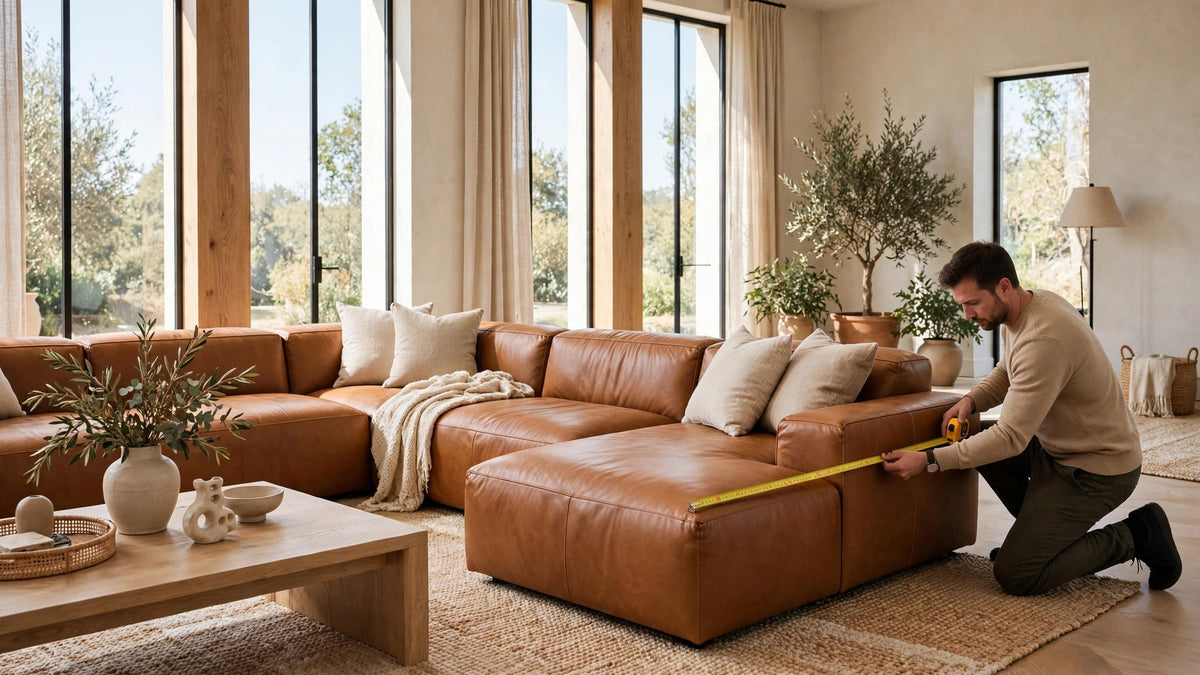
Some sectionals — including our Emilia — use genuine leather on every seating surface, with matched panels on the sides and back. You get real leather everywhere you actually touch, at a price that makes sense. Care is identical: condition the leather seating areas once a year, wipe everything else with a damp cloth.
The mistakes that actually damage leather
- All-day direct sun. The #1 killer. Fading is gradual, then suddenly obvious.
- Harsh cleaners. Bleach, ammonia, all-purpose sprays, and "leather wipes" with unknown chemistry. Damp cloth and proper conditioner — that's the list.
- Letting spills sit. Red wine wiped in 30 seconds is a non-event. Red wine discovered tomorrow morning is a stain. Leather buys you time, not immunity.
- Sharp objects. Pet claws are fine — leather resists punctures well. Box cutters during unboxing are not. Cut boxes away from the furniture.
- Placing it against a heat vent. A floor vent blasting hot air at the back of a sectional all winter dries leather out. Redirect the vent or shift the piece a few inches.
Kids, dogs, and summer
This is where leather earns its price. Juice boxes, muddy paws, sunscreen-covered kids coming in from the pool — all of it wipes off leather in seconds. The same afternoon destroys a fabric sectional.
For households with dogs: leather doesn't trap hair or dander, and it resists claw punctures far better than woven fabric. Keep nails trimmed (for the dog's sake and the furniture's) and you're set.
For post-pool life: towel off before sitting. Chlorine water left to dry on leather repeatedly will dry it out. A dry-off rule and a throw blanket over the favorite seat handle it.
When to condition vs. when to call it
Condition on a schedule — spring and fall is easy to remember (before the heavy-sun months and after them). If the leather ever looks dull or feels dry to the touch, condition it then, regardless of schedule.
If you inherit a dried-out, cracked piece: conditioner can improve it but can't reverse deep cracking. That's a reupholstery conversation, not a conditioning one. Buy the good piece, maintain it lightly, and you'll never have that conversation.
Picking a conditioner (what to look for)
You don't need the expensive boutique stuff. Look for:
- A dedicated leather conditioner, not a cleaner-conditioner combo doing two jobs halfway. Separate steps work better.
- No silicone, waxes, or petroleum distillates high on the ingredient list — they sit on the surface and attract dust instead of feeding the hide.
- A small test spot first. Apply to a hidden area (under a seat cushion, behind the back panel), wait a day, and check for darkening before doing the whole piece. Quality conditioner rarely darkens leather, but leather varies.
One bottle lasts years for a single sectional. This is a $15 purchase that protects a $2,000+ piece — the highest-ROI maintenance in your home.
A simple seasonal calendar
Tie conditioning to seasons you'll remember:
- March (spring): vacuum crevices, wipe down, condition. You're heading into the months of strongest sun.
- October (fall): repeat. Summer is over, the sun drops, and the piece gets a refresh before holiday season traffic.
Between those, the only job is wiping spills when they happen and keeping the piece out of direct sun. Set two phone reminders and forget about it otherwise.
Frequently asked questions
Does leather crack in heat? Not in an air-conditioned home. Cracking comes from sustained heat plus dryness — direct all-day sun or non-climate-controlled storage. Condition once or twice a year and keep it out of the sun's direct path.
How often should I condition leather furniture? Once or twice a year is enough for most households. Twice if the piece sits near a bright window or you run the heat hard in winter.
Can I use baby wipes or all-purpose cleaner on leather? No — stick to a damp microfiber cloth for cleaning and a proper leather conditioner for conditioning. Harsh chemicals dry out and discolor leather.
What about sectionals with matched panels on the sides and back? Same care, slightly simpler. The genuine leather seating areas get conditioned once a year; the matched panels just get wiped clean. You get real leather everywhere you touch.
Will my dog ruin a leather sectional? Almost certainly not. Leather resists scratches and punctures far better than fabric, wipes clean, and doesn't trap hair. It's the most pet-friendly upholstery you can buy.
Does leather get too hot to sit on in summer? Indoors with AC, no. It may feel warm for a moment on a hot day until the room cools — a throw blanket on the favorite seat solves it completely.
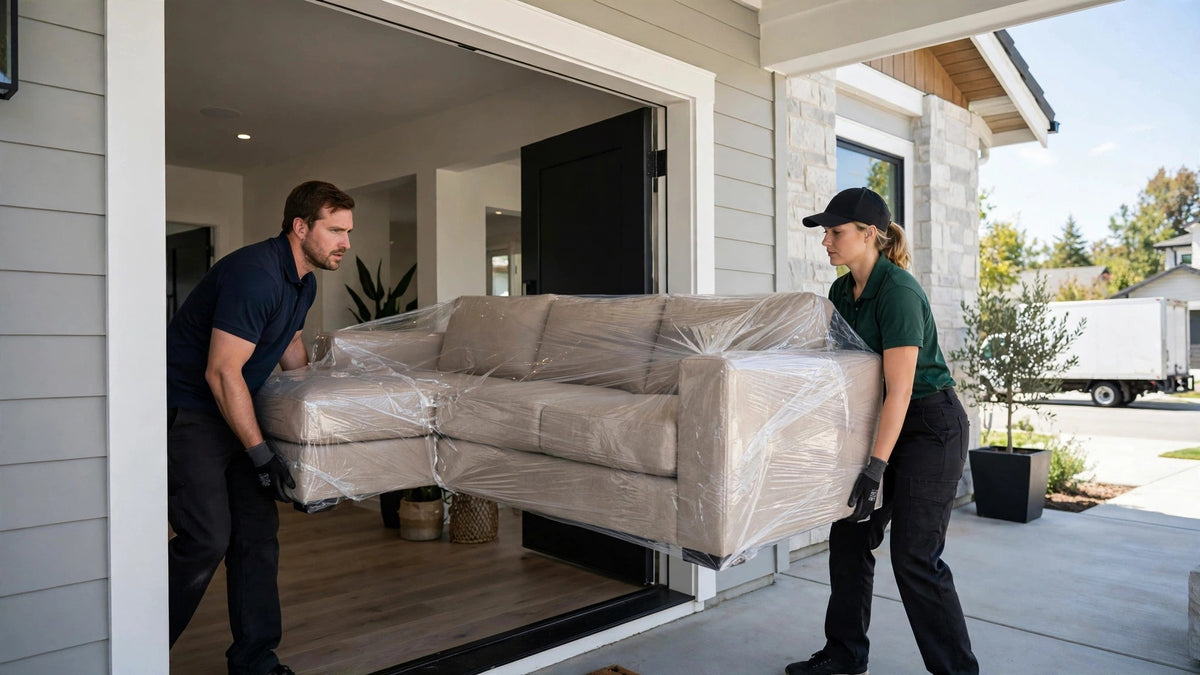
Related guides: Leather vs. Fabric Sectionals: What Houston Buyers Should Know · Furniture Delivery: What to Expect
Select Living Furniture is a Houston-area furniture store with a 4.9 rating across 194 Google reviews. Visit our Pearland showroom at 1130 E Broadway St Suite 102, open daily 12–6 PM CT, or call/text (832) 623-4833 or (281) 299-9248.

Leave a comment
This site is protected by hCaptcha and the hCaptcha Privacy Policy and Terms of Service apply.